
A guide to wheelchair padel
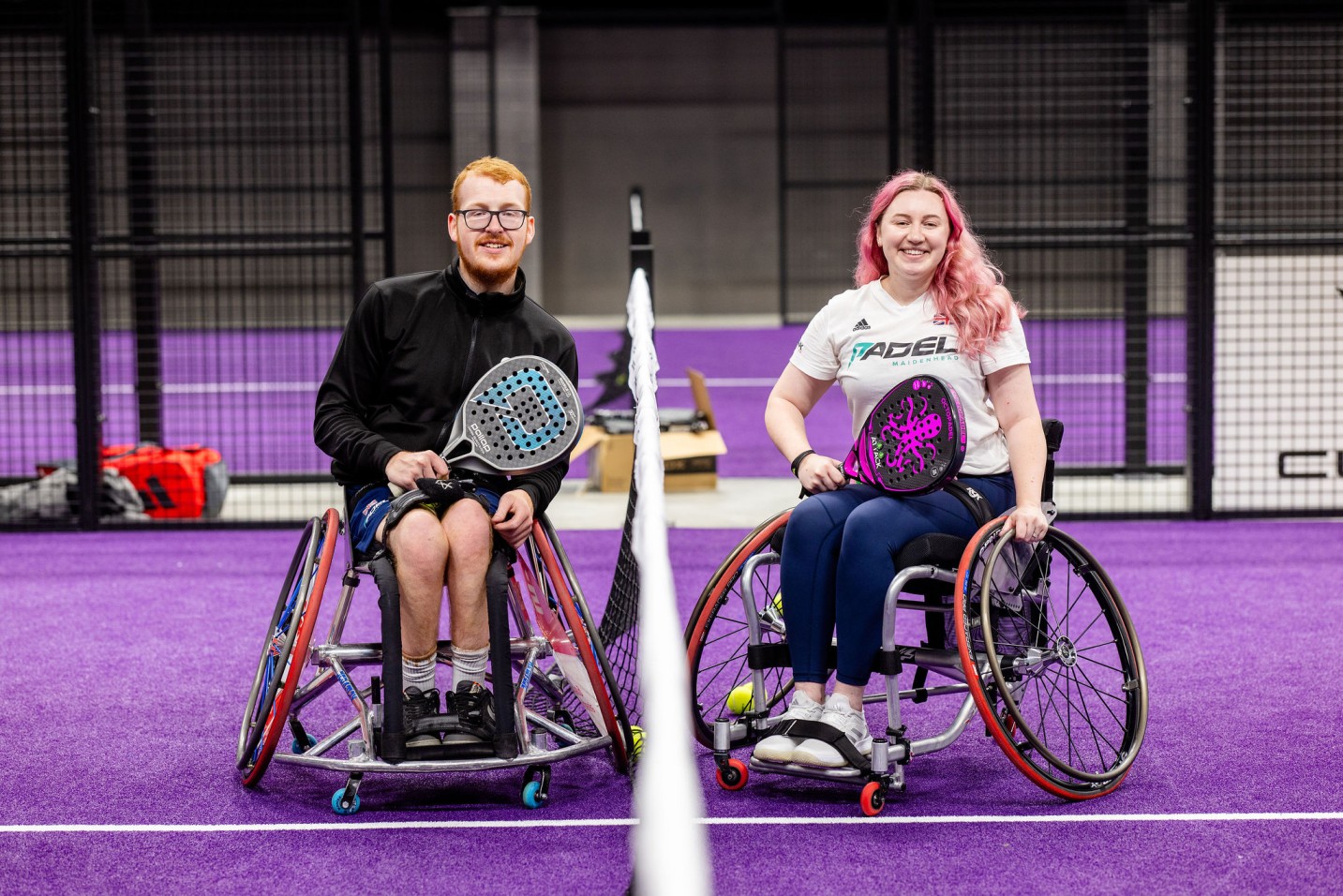
Padel is often cited for its accessibility and that certainly applies to wheelchair users who can compete within the glass walls with just a few simple rule adaptations.
Padel has many distinctive features which make it inherently inclusive. The walls keep the ball contained and create more opportunity to return it. The doubles format and small court mean there is less space for each person to cover.
The rules can be adapted to each person’s needs, making it possible for wheelchair players, para-standing players and non-disabled players to share the same court. That creates far more opportunities to participate than in sports where disabled players can only attend disability-specific sessions or competitions.
Format of wheelchair padel
Wheelchair padel can be played with four wheelchair players on court, or with one para-standing/non-disabled player on each team.
The leading disability padel competition internationally is the Inclusive Padel Tour, which pairs a wheelchair/para-standing player with a non-disabled player, allowing people with and without disabilities to compete together.
There is, as yet due to the infancy of this format, no formal adoption of a classification system to categorise players with different levels of impairment.
What are the adapted rules of wheelchair padel?
The main adaptation is the two-bounce rule: a wheelchair player is allowed two bounces before returning the ball. If partnered with a non-disabled player, he or she is only allowed one bounce.
Other common wheelchair-specific adaptations include:
- The serve can be struck below shoulder height rather than below waist height
- The front wheel or wheels must remain behind the service line
- The chair must remain stationary during the serve, although slight wheel movement is allowed
- A player who cannot bounce the ball comfortably by hand may use their racket to do so
- The wheelchair is treated as part of the player’s body, and players must remain in contact with and properly secured to their chair
Otherwise, court dimensions, rackets, balls, scoring and use of the walls are the same.
Opportunities to participate in wheelchair padel
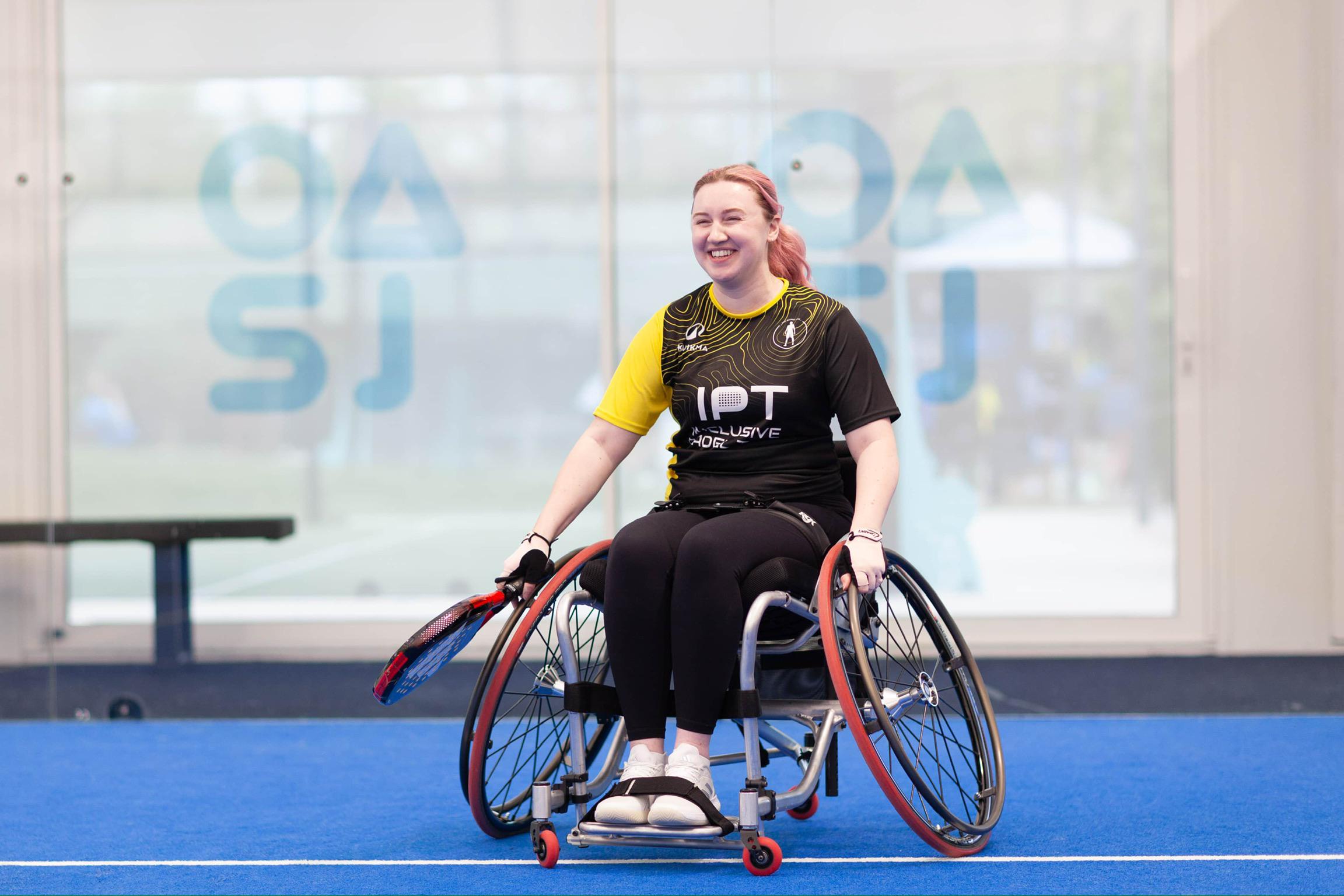
More and more clubs are running wheelchair and/or adaptive padel sessions, and as participation builds there will be scope for a national competitive structure.
The Inclusive Padel Tour (IPT) has a global calendar of adaptive competitions which includes a tournament in the UK at Padel Maidenhead in Berkshire. IPT launched a UK series in September 2026 at Barrio Padel in Nottingham.
Find out more about the Inclusive Padel Tour
Impact of wheelchair padel
Kristen Paskins, a GB adaptive padel player and co-organiser of the IPT UK Series, shares what wheelchair padel has meant to her since she was diagnosed with functional neurological disorder in 2023.
"Padel has had a really positive impact on my life. It has given me a way to stay active, develop new skills and work towards meaningful goals. Just as importantly, it has introduced me to a supportive community and created friendships, confidence and a sense of belonging.
"That wider impact is one of the most valuable aspects of disability sport. It brings together people with shared experiences who can support and learn from one another. Competition has its place, but for many people the greatest benefit is simply feeling part of something."