
Top five tips for playing padel in winter
• 3 minutes read
Just because the winter is here, doesn’t mean you need to put your padel racket away for the next few months.
In fact, the winter can be a prime time to get on court when it can be a bit quieter.
With the right padel equipment, a proper warm up and a few adaptations, you can have just as much fun on the padel court in the winter as you would in the summer.
Here are our top tips to make sure you’re ready before heading to the padel courts this winter.
Wear the right padel clothing
Wearing good footwear is essential for playing padel year-round, but is more important when playing in wet or slippery conditions. You should make sure your padel shoe soles have good tread and grip to avoid slipping on the courts if it’s a bit damp.
It’s also important to wear the appropriate clothing for when the temperatures drop.
If you’re playing on an outside padel court, we’d recommend starting your sessions wearing more layers, as it’s easier to remove layers when you’re warm rather than adding them when you’re cold.
You might also want to bring a spare change of kit with you, such as a jumper or t-shirt, to account for any sudden downpours or change in the weather. That way, you can get changed into some dry, warm clothes after your hit.
Read our padel equipment guide
Warm up before your session
A proper warm-up is essential all year round, but it becomes even more crucial during the colder months.
As the temperatures drop, your muscles and joints become more vulnerable, increasing the risk of injury like strains and pulls. Therefore, preparing well is crucial before stepping onto the padel court.
We recommend setting aside around 90 minutes for a one-hour padel session. This allows roughly 15 minutes beforehand to fully warm up, plus an additional 15 minutes afterwards to cool down, helping prevent stiffness once your body has cooled down.
Dynamic stretches that mimic padel movements such as leg swings, arm rotations, lunges and side shuffles are excellent for getting your body ready for the quick changes of direction and explosive movements on the padel court.
In wet and cold conditions, padel balls can become damp, increasing the risk of injury in the arm or wrist. Therefore, it's worth incorporating resistance bands into your warm up to help strengthen and activite your wrist, elbow and shoulder joints.
We also suggest spending a few minutes practising padel-specific drills before getting stuck into your session. Rallying with your partner, hitting the ball off the glass and practising overheads and volleys at the net are effective ways to warm up the body while shaking off any rustiness.
Adapt your game to suit the weather
Did you know that the weather can affect the way the padel ball behaves?
Padel balls lose their bounce and become less lively in the colder temperatures, which can slow down your rallies and make your shots less effective. Therefore, you’ll need to adapt your game effectively to stay in control of the points and capitalise on your opponents’ mistakes.
For example, a well-hit smash will usually rebound high off the glass and make it difficult for your opponent to return but in the winter, the ball won’t rebound as much, making it easier for your opponent to retrieve.
Wet weather can make the glass quite slippering, meaning the ball may bounce quite differently if it hits it. Therefore, it might be worth using shots that don't require using the glass, and coming forward to the net more than you usually would.
At this time of year you’ll probably be hitting more bandejas than flat smashes. However, if you do want to hit a flat smash during a rally, you can aim a little deeper in the court.
In Spain this deeper shot is often called a ‘winter smash’. The idea is to get the ball to come back faster and lower, compared to a normal smash where you’re aiming to get it over the opponents’ heads. To hit a winter smash, aim for the ball to bounce past the service line.
Take a common sense approach when playing outdoors
When playing in poor weather, it’s important to be sensible. If you think there’s a chance the conditions might be unsafe, or if weather warnings have been issued, it’s best to consider postponing your session. Taking unnecessary risks in unsafe conditions can increase the likelihood of accidents or injury.
Make a habit of checking the court both before you start playing and throughout your session. Even if it's not raining when your game begins, the surface can still get very slippery when wet, so it's important to check whether the court has fully dried since it last rained.
If it starts to rain or snow during your hit, someone slips on the court, or the surface becomes unsafe, stop play immediately to ensure no one gets injured.
With the shorter days and less daylight, it’s important to make sure you have adequate light to play safely, otherwise you could end up misjudging the ball and end up tripping, slipping or falling over. Make sure you use floodlights if they are available.
Book an indoor court
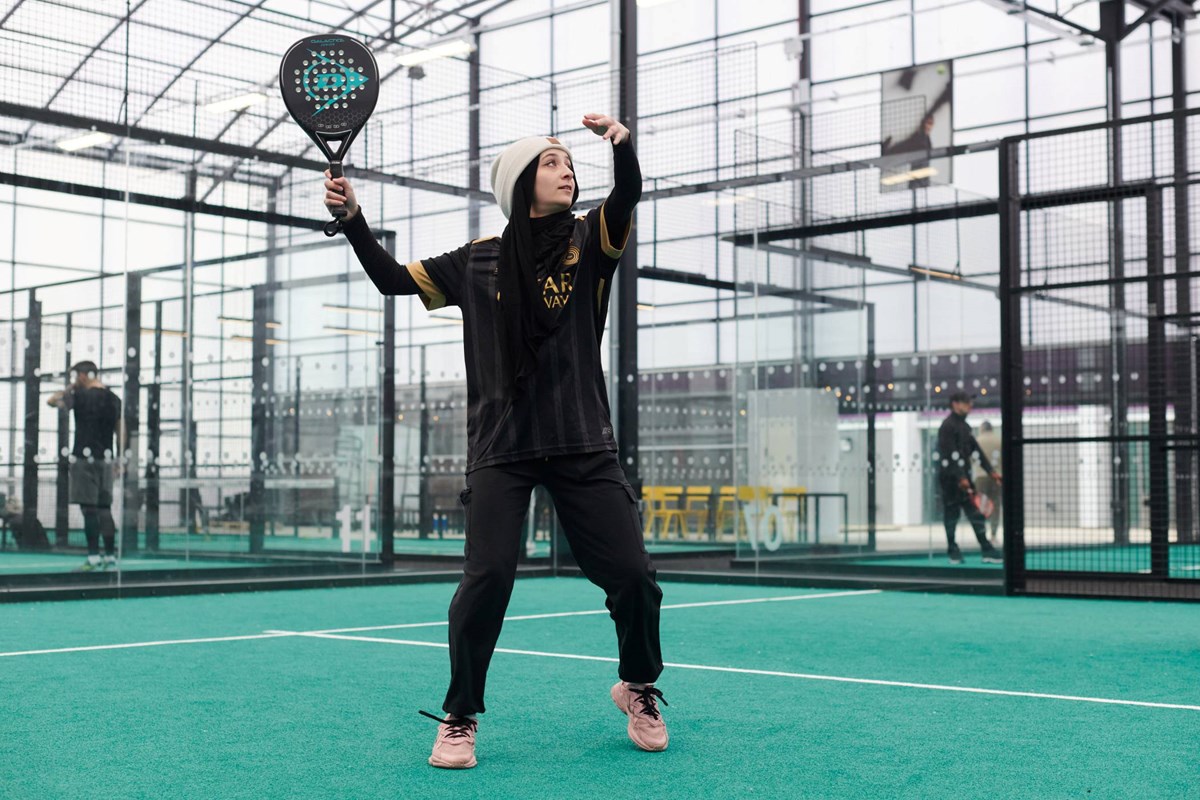
With an increasing number of indoor padel venues popping up across the country, you can enjoy the sport no matter how wet, windy, or cold it gets outside.
Indoor courts are a great alternative for the more severe weather conditions, meaning you can still train consistently, improve your skills, and play with friends and family all year round.
So whether you’re looking to squeeze in a quick hit after work, practice your volleys, or enjoy a full session with friends, indoor facilities make it simple to keep your game sharp regardless of the weather outside.
Find and book your nearest indoor padel court:
Find a padel court near you
Don't let the cold stop your game. Grab your racket, wrap up warm and find a padel court near you this winter.