Common beginner padel mistakes and how to fix them
• 3 minutes read
One of padel's principal charms is that it very quickly gives you that cherished and addictive feeling: 'I can do this!'
But although the 'getting the hang of it' process happens quite rapidly, beginners' progress can soon plateau because they make classic common mistakes.
These errors can come from not adjusting to the uniqueness of the padel court, particularly if you’ve come from a tennis, squash or other sporting background.
Here, we break down some of the most frequent mistakes beginner padel players make and how you can eradicate them from your game to give yourself the best chance of improving.
Use the glass
Often, players pick up hand and volley skills quickly on the padel court, but at some point they may hit a ceiling because they’re not used to using the glass to slow the ball down.
These habits can become a barrier to improvement if players depend on them too much and neglect to develop new skills.
There are two reasons why you should use the glass. The first is to be able to hit a ball you wouldn't otherwise get to. An example would be an opponent's smash which is too fast for you to defend comfortably, but if you let it hit the glass, the ball slows down and you can return it more easily.
The second reason is to attack with a type of shot you wouldn't otherwise be able to. For example, your opponent hits a deep lob, you may only be able to hit an average defensive return, unless you wait for it to hit the glass, bounce up and forward into a better position, which would allow you to attack it. This is called a bajada.
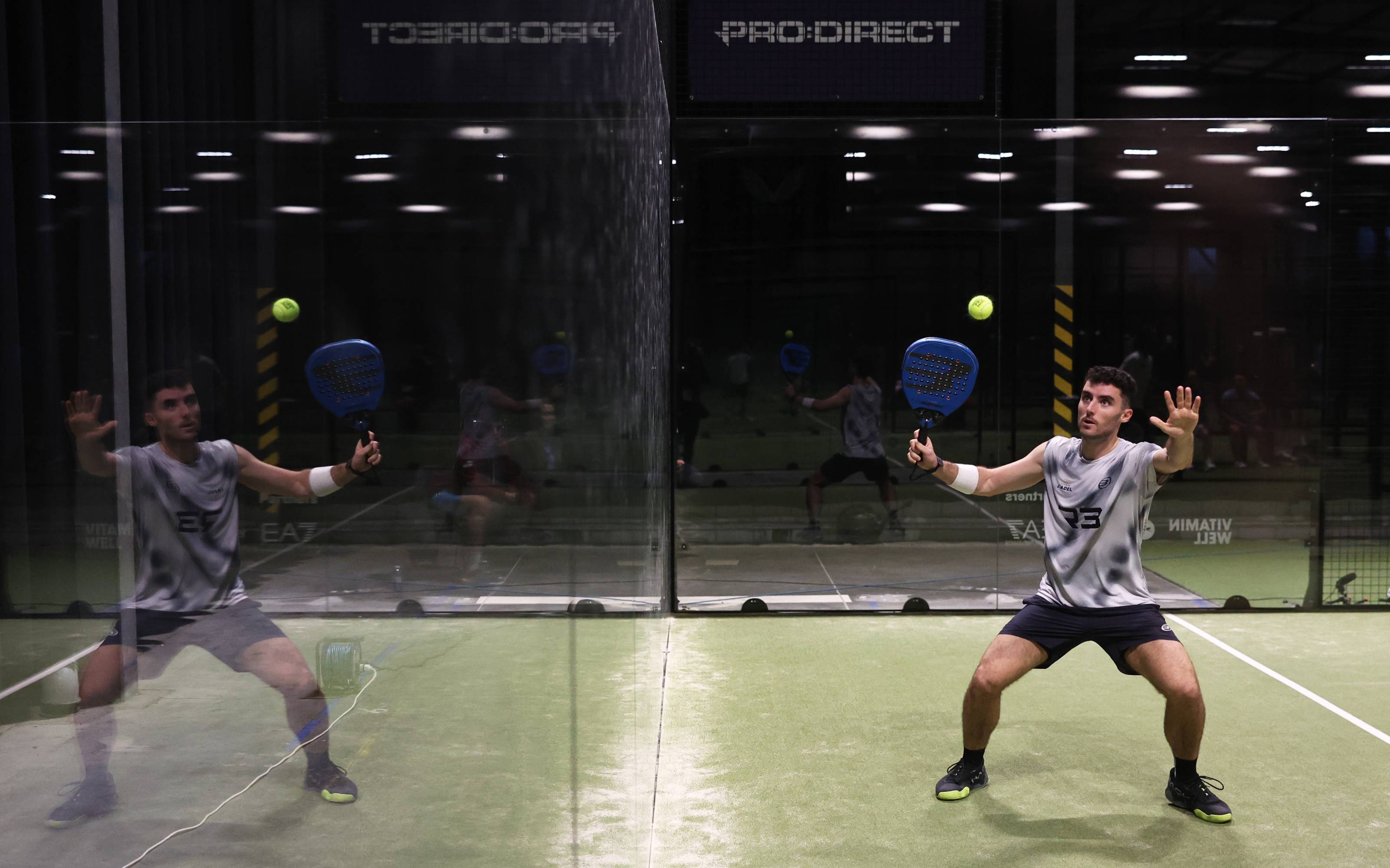
As daunting as using the glass may be, if you don't give yourself the chance to practice using the you won't get better at it. Players who rely on skill to get them out of using the glass may hit a ceiling because they rely too much on raw hand-skills, which can only get you so far in the game.
We recommend using the glass whenever you can during your games. This will help you work out when you should use the glass and when you shouldn't. You'll have to accept there will be instances where you try to use the glass and it doesn't work out because you've read it wrong, but that's part of the learning process and your judgement will improve over time.
For new starters, it can help to use the service line as a decision line; so if the ball bounces past the line, use the glass, and if it bounces before it, hit it!
How to hit off the glass in padel
Use power as one tool, not the only tool
Although this is often cited as a classic common padel mistake, there is a bit of a misconception that power isn't effective. If you watch the top level of the sport, they hit the ball pretty hard!
In most other sports, power is your go-to weapon and the assumption is that hitting hard is always better.
But in padel, power is just one of your weapons, but it’s important to understand when power is effective.
Obviously, hitting it hard so that the ball bounces up perfectly off the glass for your opponent to come forward closer to the net is not going to be a smart use of power. So explore how to be difficult without hitting the ball hard, then you'll develop a toolkit of weapons that aren't power-based.
For example, instead of a hard smash that rebounds high off the glass and offers your opponents an attacking position towards the net, try hitting a bandeja (a controlled volley at head-height) that lands deep in the court, which pushes your opponents back and bounces lower off the glass. That might force a weak lob return, which may give you a better position to use power with your next shot.
Why placement beats power in padel
Serve and volley
For beginners, we recommend you start practising serving and volleying as soon as possible, because every time you do it you are going to get better at it. It’s also a crucial pattern of play which teaches you that moving to the net after the serve is integral to success.
If you don't serve and volley you're essentially not investing in something that will make you get better faster.
Squash players, for example, instinctively like to hang back in the court, but serve and volleying is a staple tactic in padel which brings success. The quicker you try it, the sooner it’ll become a natural part of your game.
Play with different people
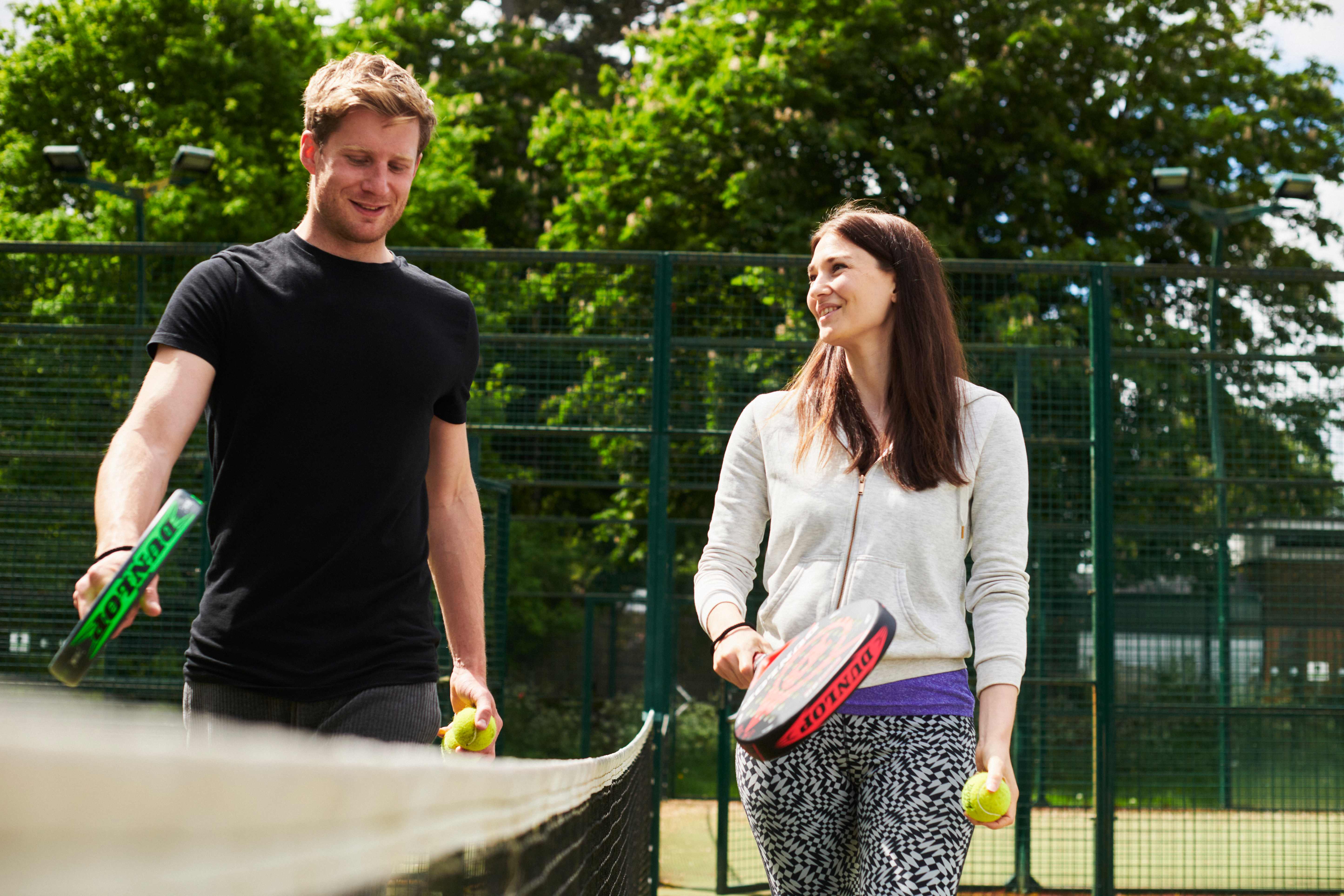
Every person arrives with different experiences and different skills from different sports. There's something you can learn from everybody. For example, there's lots of valuable learning from tennis players mixing with squash players on the padel court.
Squash players have an instinct for judging the length and path of a shot, judging the bounce off the walls and adjusting their feet and body quickly to hit a return. Using the glass is second nature for squash players, which is something those transitioning from tennis can learn.
Conversely, squash players can learn from tennis players how to serve and volley and when hitting the ball hard can be effective.
Meanwhile, if you’ve got experience playing in other team sport environments such as football, or netball, you’ll bring other skills such as communication and teamwork which are crucial to success on the padel court.
Learn correct positioning
Understanding the spaces you need to cover on a padel court is critical. If you're in the wrong place, you're defending when you should be attacking and you're offering your opponent spaces to hit into.
Correct positioning includes the serve, return of serve, being at the net, when your opponents are at the net, and where the ball is being hit from (which side, how wide and how deep).